What does Civic Life Look Like?
Overview
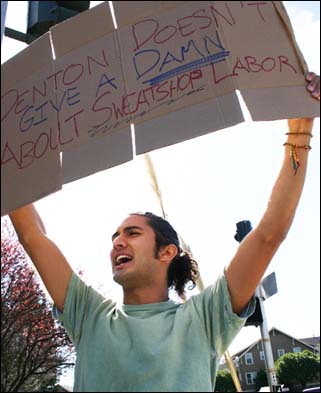
In the last session, we looked at our responsibilities as citizens and how it has been demonstrated through past court cases.
In this final session of the unit and course, you will explore the advantages and disadvantages of forms of participation.
You will evaluate ways of participation within our own government. You will understand the responsibility people have to promote the common welfare and demonstrate your knowledge through analyzing historical events and hypothetical situations.
Introduction

In this session, you will...
- Evaluate the ways that citizens can participate
- Analyze historical situations to justify citizens' actions
- Evaluate scenarios to determine civic virtue
Advantages and Disadvantages of Forms of Participation in Government

Anyone who is born in the United States or whose parents are United States citizens is a citizen of the United States. The government is set up to protect the many rights for anyone who lives in the United States. Within the participation in government may come some advantages and disadvantages depending on our personal values.
Take a look at the links below, which highlights our rights and responsibilities as citizens. Then, complete the worksheet by evaluating the 10 Ways Citizens Can Participate List and answer the questions to each item stated in the list.
Submit your work as a Word Document via your Brady Gmail account.
Disagreement Over Citizen Responsibilities
Citizens of the United States tend to disagree about the responsibilities of citizens, however most will agree that:
If you choose to live among others in a society and enjoy the society's Benefits, you are responsible for obeying the society's rules.
If you speak freely, you should respect other people's rights to do the same.
If you deny others their rights, you may have to give up your own.
When laws or governmental actions conflict with a citizen's view of what is right and wrong, citizens struggle and face a difficult decision.
Instructions:
Suppose the government passes a law requiring you to do something you believe is wrong, must you obey the law? Some people argue that since no government is perfect, a citizen's responsibility to obey the law has limits. Deciding to disobey a law is a serious step. Disobeying the law has consequences, which citizens must be prepared to accept.
Throughout history, many citizens have accepted the consequences for protesting a law they felt was wrong. Evaluate the following pieces and write a paragraph for each piece explaining whether or not you believe this person's actions to protest a law was right or wrong. Do citizens have these rights?
Submit your work as a Word Document via your Brady Gmail account.
Creating a Plan to Participate Video

The framers believed that the people must have a civic virtue if the Constitution were to succeed. People with civic virtue put the common welfare over their own interests.
Therefore, citizens should elect people to public office who will put the common welfare over narrower, local interests. If citizens do not understand their responsibilities, their rights are not safe and the advantages of constitutional democracy are in danger.
Now that you have learned a great deal about our nation's government and citizen responsibility it's time to put you to the test! President John F. Kennedy reminds us of our duty as citizens.
When you are done watching the video, go to the next two sections and answer the questions for the "Scenarios."
Scenario A-Creating a Plan to Participate
Senator Martin represents a state where many of his citizens work in factories making cars. These manufacturing plants are beginning to lay off more and more workers because American made cars can no longer compete with cars made in different countries. Cars can be made at a lower cost in other countries because workers are paid less. These cars are then sold at lower prices than those made in the U.S.
The low prices may be good for people buying cars, but not so good for those making the cars in the U.S. The problem that Senator Martin is faced with is: should he support a bill that places a tax on cars made in other countries? If the bill passes and becomes a law, his citizens will have jobs and more cars will be sold and it will cause the price of cars to go up and will be expensive for people who need to buy them.
Scenario B-Creating a Plan to Participate
Megan was worried. Seven of her friends at school were going to join in a protest after school the next day. They were planning to demonstrate against school uniforms. Like her friends, she believed that school uniforms would go against what she stands for. She believes students should be free to wear what they would like at a public school.
Megan was worried about what would happen if she joined the protest. She may be suspended from school, affecting her college acceptances. She could also find herself arrested, especially if the protest were to get out of hand, keeping her from getting a good job. On the other hand she didn't want to let her friends down. What should Megan do?
- Answer the questions on the Scenario B Worksheet and submit via your Brady Gmail account.
Did I Submit It?

Now that you have a better understanding about what civic life SHOULD look like, let's make sure that you completed all the assignments in this session before moving on to the final assignment for this course, the Unit 3 Assessment.
√ I submitted it!
- U3S4 - 10 Ways Citizens Can Participate worksheet
- U3S4 - Historical Piece paragraph responses
- U3S4 - Scenario A worksheet
- U3S4 - Scenario B worksheet
ALMOST DONE! Let's move on to the final unit project for this course.
